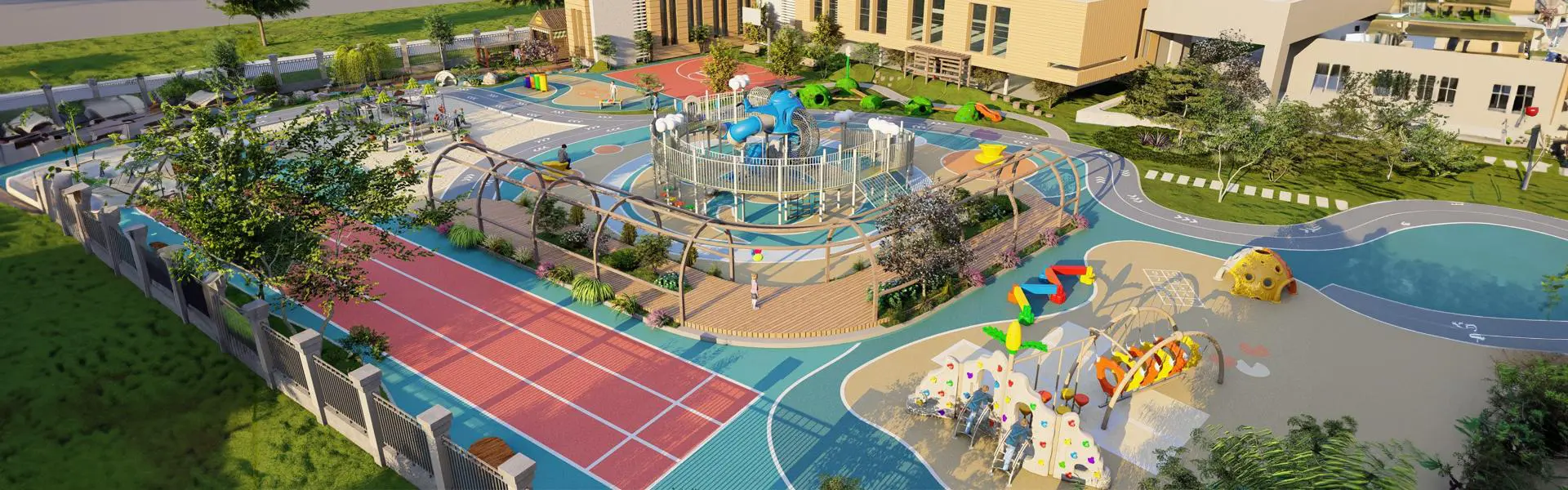
Creating an indoor playground that both captivates and entertains children is a multifaceted task. The design must be aesthetically pleasing, safe, and functional, providing endless fun while promoting physical activity and cognitive development. Among the myriad of design elements, hanging structures have become increasingly popular for their unique blend of excitement and challenge. Here’s an in-depth look into the art and science of designing hanging indoor playgrounds.
Understanding the Importance of Hanging Structures
Hanging structures in an indoor playground offer numerous benefits that traditional play areas may not provide. They encourage gross motor skills, hand-eye coordination, balance, and problem-solving abilities. Moreover, these structures often add a vertical dimension to the playground, making the most out of limited floor space—a crucial factor in urban settings or smaller venues.
Materials and Safety
Safety is paramount when it comes to indoor playground design, especially with hanging structures where falls can be more severe. High-quality materials like heavy-duty ropes, reinforced netting, and non-toxic, durable plastics are essential. The structures should be securely anchored to the ceiling to ensure they can withstand the dynamic loads imposed by active children. Regular inspections and maintenance are also critical to uphold safety standards.
 Design Elements
Variety of Structures: Incorporating a mix of swings, climbing nets, trapezes, and rope bridges can keep the experience diverse and engaging. Each element offers a different challenge, catering to various age groups and skill levels.
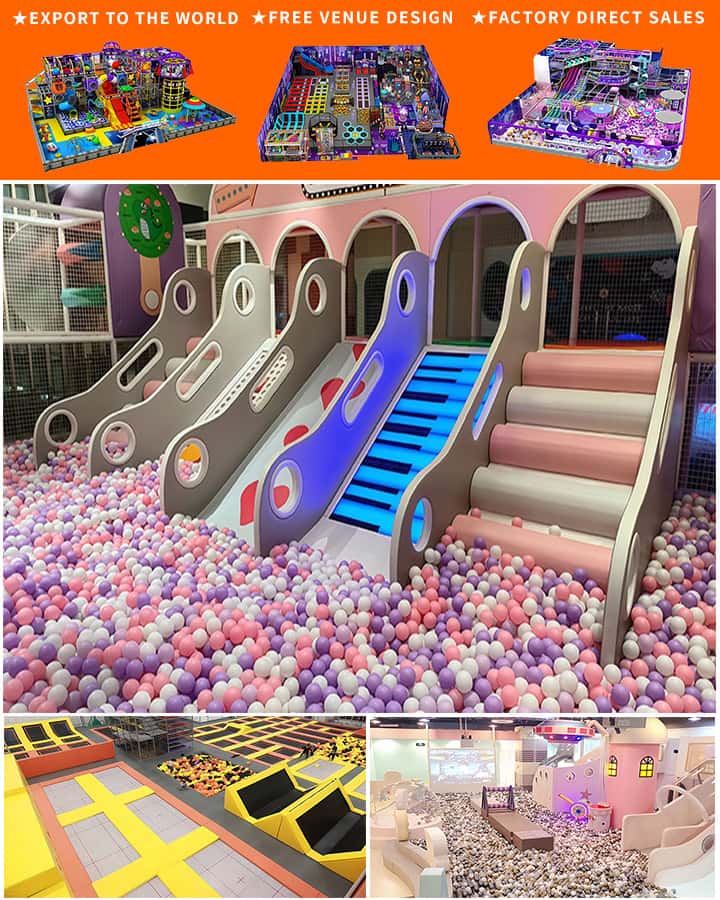
Color Schemes: Bright and vibrant colors not only make the playground visually appealing but also stimulate children’s imagination. Combining contrasting colors can highlight different zones within the playground, guiding movement and interaction.
Integration with Floor Play Areas: Hanging structures can seamlessly integrate with floor-level activities, creating a cohesive play environment. For example, a climbing wall under a hanging rope bridge provides continuous engagement as children move from one activity to another.
Modularity: Designs should be modular to allow for easy reconfiguration. This flexibility enables the indoor playground to grow or change with evolving needs without extensive renovations.
Psychological Considerations
A well-designed indoor playground does more than just provide physical entertainment; it fosters social interaction and emotional growth. Hanging structures can serve as communal hubs where children learn to share, take turns, and develop teamwork skills. Moreover, overcoming the challenges presented by these structures boosts self-esteem and confidence.
Accessibility and Inclusivity
Inclusive design is another critical aspect. Ensuring that children of all abilities can enjoy the playground means incorporating features like wheelchair-accessible zip lines, sensory-rich elements, and varying difficulty levels to cater to diverse physical capabilities.
Environmental Impact
Sustainable materials and eco-friendly designs are gaining importance in modern playground construction. Using recycled materials, energy-efficient lighting, and non-toxic finishes not only reduces environmental impact but also promotes a healthier indoor environment.
In conclusion, a well-thought-out hanging indoor playground combines creativity, safety, and functionality to deliver an enriching experience for children. By focusing on varied structural elements, safety measures, psychological benefits, and inclusiveness, designers can create spaces that are not only fun but also instrumental in a child’s developmental journey. As the demand for innovative indoor play areas continues to rise, these principles will undoubtedly guide the next generation of playground designs.