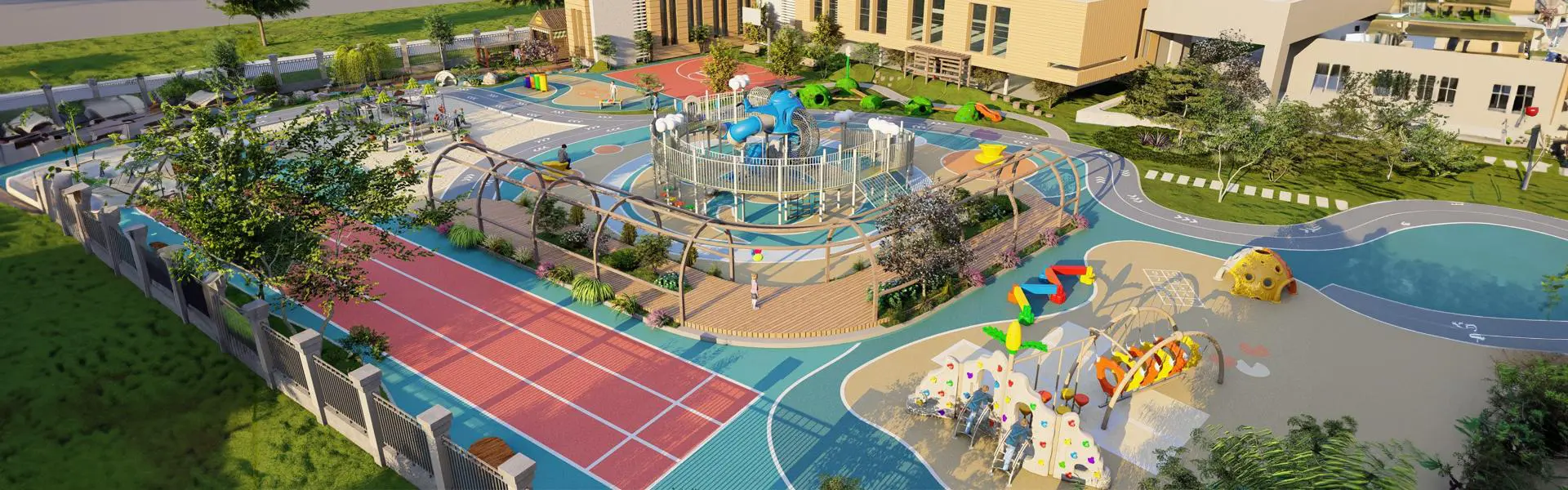
Daycare centers are a crucial part of early childhood development, providing a nurturing and stimulating environment where young minds can grow. One essential aspect of these facilities is the playground area, equipped with a variety of playground equipment designed to foster physical activity, social skills, and overall well-being in children. This article explores the importance of playground equipment in daycare centers and highlights how it contributes to the holistic development of young learners.
Promoting Physical Development
Playground equipment plays a significant role in promoting physical development among children. Activities such as climbing, sliding, and swinging help enhance motor skills, balance, and coordination. For instance, climbing structures encourage upper body strength and hand-eye coordination, while slides provide an engaging way for children to practice balance and control. Moreover, interactive elements like seesaws and merry-go-rounds promote teamwork and cooperation, further supporting physical fitness.
 Supporting Social Skills
Beyond physical benefits, playground equipment also supports the social development of children. Playground activities often involve group play, which teaches children essential social skills such as sharing, taking turns, and communicating effectively. For example, a shared climbing structure or a group swing set requires children to interact, negotiate, and cooperate with one another. These interactions are vital for developing social competence and empathy, which are foundational for positive relationships throughout life.
Encouraging Cognitive Growth
Playground equipment also stimulates cognitive growth by encouraging imaginative and creative play. Items such as sandboxes, playhouses, and interactive panels invite children to engage in pretend play, which is crucial for cognitive development. Through imaginative scenarios, children learn problem-solving skills, improve their language abilities, and enhance their creativity. Additionally, sensory-rich equipment like musical instruments or textured surfaces can stimulate sensory exploration and fine motor skills.
Creating a Safe and Inclusive Environment
Safety and inclusivity are paramount when it comes to playground equipment in daycare centers. Ensuring that the equipment is age-appropriate, well-maintained, and meets safety standards is crucial for preventing injuries. Furthermore, inclusive playground design considers the needs of children with diverse abilities, ensuring that all children have equal opportunities to play and benefit from the equipment. Features such as wheelchair-accessible ramps, tactile paths, and adaptive swings can make the playground more accessible and enjoyable for everyone.
Conclusion
Playground equipment is more than just a source of fun; it is a vital component of early childhood education in daycare centers. By promoting physical fitness, supporting social skills, encouraging cognitive growth, and ensuring safety and inclusivity, playground equipment contributes to the holistic development of young learners. Investing in quality playground equipment not only enhances the daycare experience but also lays the foundation for healthy, well-adjusted individuals ready to embrace the world with confidence and curiosity.