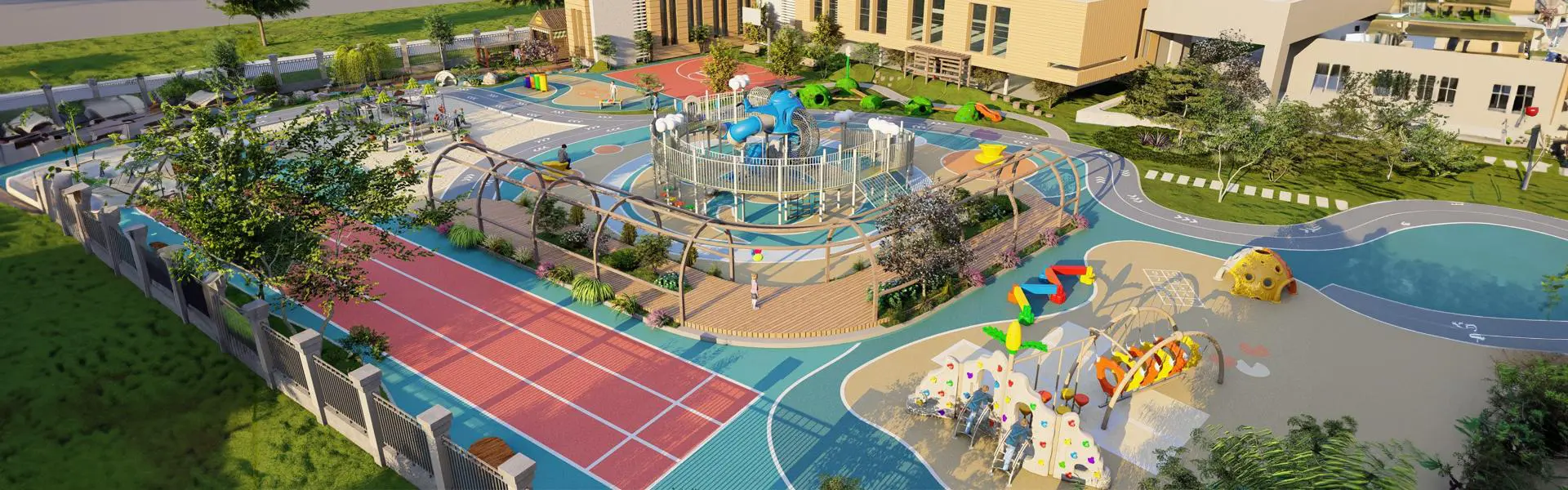
Designing an indoor playground for children can be a delightful and rewarding experience, offering a safe and stimulating environment that encourages physical activity, creativity, and social interaction. Whether you’re setting up a play area at home or planning a commercial indoor playground, careful consideration of various elements will ensure that the space is both fun and functional. Here’s a comprehensive guide to creating the ultimate kids’ indoor playground setup.
Planning and Preparation
1. Space and Safety: The first step in designing an indoor playground is assessing the available space. Ensure the area is large enough to accommodate the desired activities and equipment while maintaining ample room for safety. Safety should be the top priority—select non-toxic materials, ensure all equipment has rounded edges, and provide soft flooring such as foam mats or rubber tiles to cushion falls.
2. Age Group Considerations: Kids of different age groups have varying needs and interests. For younger children (toddlers and preschoolers), include gentle slides, small climbing structures, interactive panels, and sensory toys. For older children (school-age kids), consider more challenging components like taller climbing walls, rope bridges, and larger play structures. Adjust the complexity of the playground equipment based on the primary age group it will serve.
Equipment and Features
1. Climbing Structures: Climbing walls and structures are fundamental to any indoor playground. They promote physical fitness, coordination, and problem-solving skills. Choose designs that vary in difficulty to cater to different age groups and abilities.
 2. Slides:
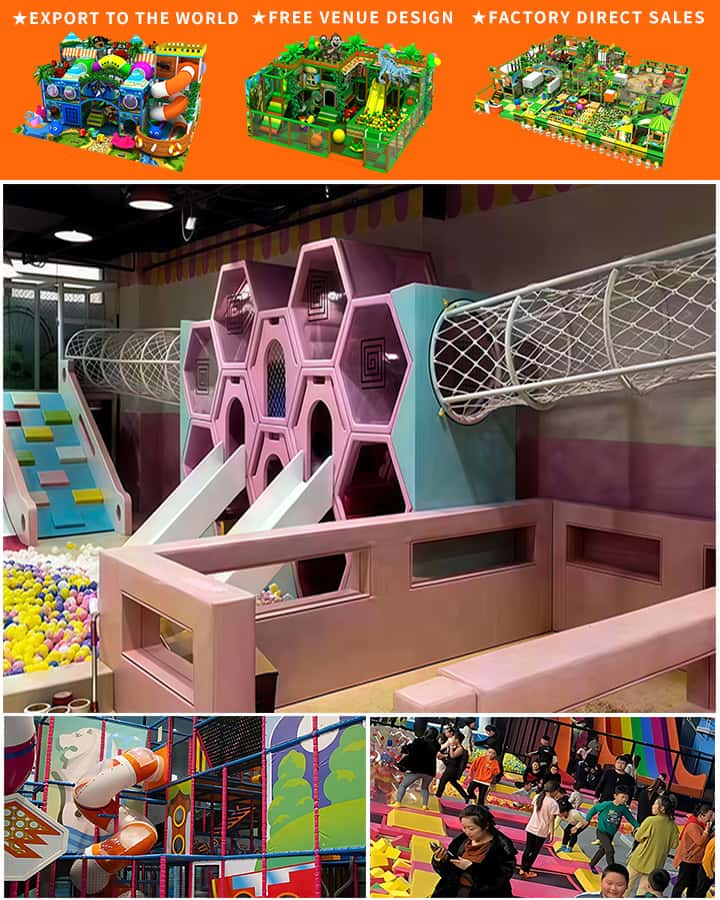
Slides add an element of excitement and can be incorporated into multifunctional structures. Opt for spiral, straight, and tube slides to diversify the experience. Ensure they are appropriately sized for the age group using them.
2. Slides:
Slides add an element of excitement and can be incorporated into multifunctional structures. Opt for spiral, straight, and tube slides to diversify the experience. Ensure they are appropriately sized for the age group using them.
3. Interactive Elements: Incorporate interactive features like ball pits, trampolines, and obstacle courses to keep kids engaged. Ball pits not only provide endless entertainment but also help improve motor skills. Trampolines offer a fun way to burn energy, while obstacle courses develop agility and strategic thinking.
4. Imaginative Play Areas: Encourage imaginative play by including elements like miniature houses, castles, and themed play areas. These zones foster creativity, social interaction, and role-playing activities.
Themed Playgrounds
1. Adventure Landscapes: Create an adventure-themed playground with jungle gyms, faux rock climbing walls, and bridges resembling those found in nature. Incorporate natural elements like faux trees and vines to enhance the theme.
2. Space Exploration: A space-themed playground can captivate kids with its cosmic charm. Use dark blue walls, glow-in-the-dark stars, and rocket ship-like structures to transport little ones to outer space. Interactive panels with space-themed games can add an educational twist.
3. Fantasy Kingdoms: Transform your indoor space into a fantasy kingdom complete with castles, dragon figures, and knightly challenges. Use vibrant colors and whimsical decorations to bring the fairy tale world to life.
Additional Tips
1. Lighting: Good lighting is essential for an indoor playground. Natural light is ideal, but if that’s not possible, use warm, ambient lighting to create a welcoming atmosphere. Avoid overly bright lights that may cause discomfort or shadows that could obscure potential hazards.
2. Ventilation: Proper ventilation ensures a comfortable environment, especially when kids are active. Install ceiling fans or air conditioning systems to maintain a pleasant temperature and fresh air circulation.
3. Maintenance: Regular inspections and maintenance are crucial to keep the playground safe and enjoyable. Check for wear and tear on equipment, clean surfaces regularly, and address any issues promptly to avoid accidents.
Conclusion
Creating an indoor playground for kids requires thoughtful planning and attention to detail. By focusing on safety, age-appropriate features, and imaginative themes, you can design a space that provides endless hours of fun and development for children. Whether it’s a personal project or a commercial venture, a well-designed indoor playground will undoubtedly become a favorite spot for kids to explore, play, and grow.